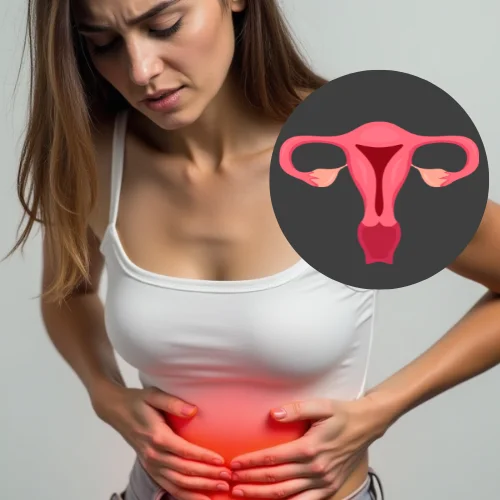
If you’ve been told you have PCOS or PCOD, you’re not alone. Nearly 1 in 8 women of reproductive age is living with this condition — dealing with irregular periods, stubborn weight gain, acne, unwanted hair growth, and the emotional toll that comes with it all.
You may have tried medications that offered only partial relief, or perhaps you’re simply looking for a more natural, lasting solution.
Here’s what Ayurveda — India’s 5,000-year-old system of natural medicine — tells us:
PCOS is not just an ovarian problem. It is a full-body metabolic imbalance. And that’s precisely why it responds so powerfully to Ayurvedic treatment.
PCOS, PCOD, or PMOS — What’s the Difference?
If you’ve been told you have PCOD, PCOS, or recently heard the term PMOS — it’s natural to feel confused. Here’s the simple truth: PCOD is the milder end of the spectrum, where the ovaries release immature eggs, and is often manageable with lifestyle changes. PCOS is the more complex clinical condition — a full-blown syndrome involving hormonal imbalance, insulin resistance, and androgen excess that affects the entire body. PMOS is not a new disease — it is simply PCOS renamed as of May 2026 by leading global health organisations, to more accurately reflect that this is a whole-body metabolic and hormonal disorder, not just an ovarian issue. All three terms live on the same spectrum. So wherever you are on it — this blog is for you.
What Does Ayurveda Say About PCOS?
In Ayurvedic terms, PCOS arises from a disruption of the three bio-energies — Vata, Pitta, and Kapha — with Kapha and Vata being the primary culprits. When digestive fire (Agni) weakens, undigested metabolic waste called Ama accumulates in the body. This toxic Ama clogs the reproductive channels, blocks proper hormone signalling, and — in modern language — causes insulin resistance.
The result? Follicles in the ovaries fail to mature properly, testosterone rises, and periods become erratic. Ancient Ayurvedic texts describe this as Pushpaghni — a condition where ovulation is disrupted — and it maps almost perfectly onto modern PCOS.
Top Ayurvedic Herbs That Actually Work
Science is now catching up with ancient wisdom. Here are the most effective Ayurvedic herbs for PCOS, backed by both classical texts and modern research:
1. Shatavari — The Queen of Female HealthShatavari (Asparagus racemosus) has been the cornerstone of Ayurvedic gynecology for centuries. Its phytoestrogenic compounds help balance the LH:FSH hormone ratio, regulate erratic cycles, and reduce the inflammation that worsens PCOS symptoms.
Think of it as a gentle yet powerful reset for your hormonal system.
2. Ashwagandha — For Stress-Driven PCOS
Chronic stress is a hidden driver of PCOS. High cortisol worsens insulin resistance and pushes your adrenal glands to produce more androgens (male hormones).
Ashwagandha (Withania somnifera) is a proven adaptogen that lowers cortisol, calms the nervous system, and indirectly reduces hormonal chaos. If you find yourself anxious, exhausted, and hormonally out of sync — Ashwagandha is your ally.
3. Cinnamon — Nature’s Insulin Sensitiser
This kitchen spice is nothing short of a metabolic miracle for PCOS. Cinnamaldehyde — its key bioactive compound — mimics the action of insulin, helping your cells use blood sugar efficiently. Clinical studies confirm that regular cinnamon intake lowers fasting blood sugar, reduces insulin resistance, and helps restore menstrual regularity in anovulatory women.
4. Fenugreek (Methi) — Curbs Sugar Cravings and Androgen Excess
Fenugreek seeds contain galactomannan fibre, which slows down sugar absorption after meals, preventing the insulin spikes that over-stimulate your ovaries to produce excess testosterone. Multiple studies show it improves fasting glucose, lipid profiles, and reduces androgenic symptoms like acne and facial hair.
5. Triphala, Guduchi & Kanchanar Guggulu — The Deep Healers
Triphala supports gut health and prevents the re-absorption of excess hormones from the intestines. Guduchi (Giloy) is a powerful anti-inflammatory that breaks the PCOS metabolic cycle at a cellular level. And Kanchanar Guggulu — the go-to classical formulation for cysts and structural anomalies — actively works to reduce the size of ovarian cysts and address associated thyroid irregularities. These are best taken under the guidance of a qualified Ayurvedic physician.
Eat Right: The Ayurvedic PCOS Diet
No herb will work in a diet full of sugar, processed food, and cold leftovers. Ayurveda insists: food is medicine. Here’s your simple guide:
✦ EAT: Warm, freshly cooked meals; millets, lentils, horse gram, leafy greens, broccoli, okra, almonds, flaxseeds, spearmint tea, and spices like turmeric, cumin, and ginger.
✦ AVOID: White rice, refined flour, cold or leftover food, excess dairy, carbonated drinks, deep-fried food, and anything with added sugar.
✦ SIP: Spearmint tea daily — studies confirm it lowers free testosterone and reduces hirsutism. Swap milk for fat-free buttermilk to support digestion without aggravating Kapha.Even a 5–10% reduction in body weight can significantly reverse insulin resistance, restore ovulation, and reduce acne and hair growth. Small, consistent changes create lasting results.
Panchakarma: The Deep Reset
For long-standing, stubborn PCOS, herbs and diet alone may not be enough. Panchakarma — Ayurveda’s powerful bio-cleansing therapy — offers a deep reset. Virechana (therapeutic purgation) improves liver function and clears excess hormones.
Basti (medicated enemas) directly addresses the pelvic Vata imbalance that causes anovulation. Udvartana (herbal powder massage) tackles stubborn fat and lymphatic congestion. These therapies are conducted under clinical supervision and have helped many women achieve dramatic symptom relief.
Move Your Body: Yoga Poses for PCOS
Daily movement is non-negotiable. Research confirms that yoga normalises the hypothalamic-pituitary-ovarian axis — the control tower of your hormones. Try these:
✦ Surya Namaskar (Sun Salutations) — boosts metabolism, melts Kapha, improves cardiovascular health
✦ Baddha Konasana (Butterfly Pose) — improves blood flow to the ovaries and uterus
✦ Bhujangasana (Cobra Pose) — massages abdominal organs, stimulates ovarian function
✦ Kapalabhati Pranayama — powerful breathing that clears metabolic channels and improves cellular oxygenation
A Word of Honest Advice
Ayurveda works beautifully — but it requires patience and consistency. It is not a quick fix. It addresses the root cause rather than masking symptoms. Most women begin to see noticeable improvements in menstrual regularity, skin, and energy levels within 3–6 months of following a holistic protocol.
However, if you’re experiencing severe fertility challenges, prolonged amenorrhea, or diabetes, please work alongside a gynaecologist or endocrinologist. Ayurveda is most
powerful when it complements — not replaces — emergency or specialist care.
The Bottom Line
PCOS is not a life sentence. It is your body’s way of signalling that something deeper needs attention. Ayurveda gives you the tools to listen — and to heal. Through a combination of targeted herbs like Shatavari, Ashwagandha, Cinnamon, and Fenugreek; a nourishing, low-glycemic diet; regular yoga; and guided Panchakarma therapies, you can restore your hormonal harmony, reclaim your menstrual health, and feel truly well in your body again.
 Healing is not just possible — it is your natural state. Ayurveda simply helps you return to it.
Always consult a qualified Ayurvedic practitioner before beginning any herbal regimen.
By – Dr. Aditi LileshKumar Jain
BAMS, NDDY, MA (Psychology) | Fellowship in Ayurvedic Nutrition